Custom Sofa Upholstery Dubai: Bespoke Options for Your Specific Needs
Custom upholstery means specifying exactly what you want rather than accepting standard options. In Dubai, where many homeowners have specific design requirements, non-standard sofa dimensions, or particular material preferences, custom work is often the way to get the result that standard services don’t quite reach.
What “Custom” Actually Means in Upholstery
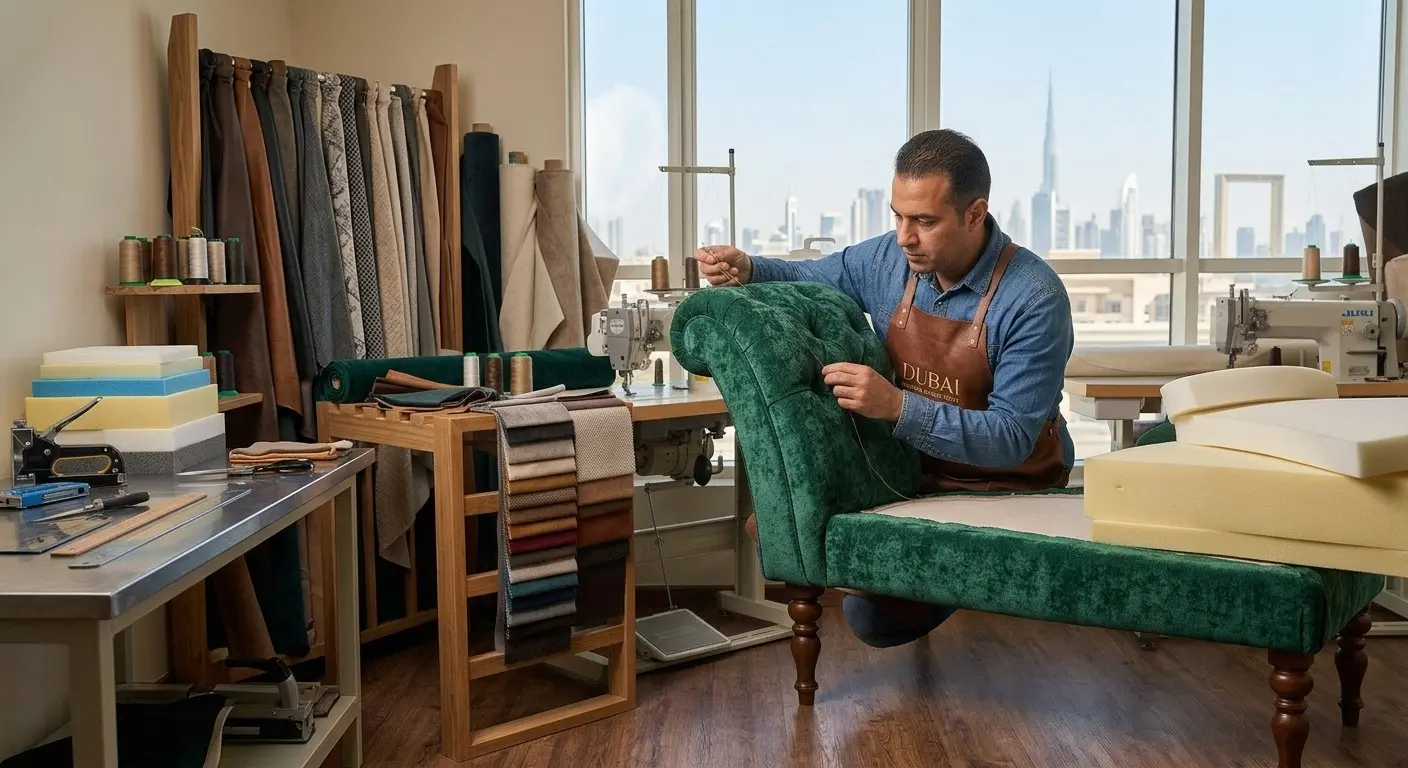
Custom upholstery starts with understanding what element you want to customise. For most people, custom means choosing specific fabric rather than selecting from a limited in-stock range. For others, it means a specific foam specification (firmer than standard, or a particular layer configuration for back and seat). For some, it means design changes like adding button tufting to a sofa that didn’t originally have it, or changing the piping from self-colour to contrast.
Genuine custom work can also mean building new cushion configurations that differ from the original. Combining two small back cushions into one large one, changing from a T-cushion seat to a knife-edge seat, or adding arm covers in a different fabric are all customisations that change the sofa’s appearance beyond simply replacing the existing fabric.
Custom can also mean commissioning entirely new cushions or pieces to complement existing furniture. Custom floor cushions for a seating area, custom bolster cushions to complete a day bed, or custom cushion covers in a specific fabric to coordinate with other upholstery in the room are all within scope.
Foam Customisation
Foam firmness is one of the most commonly requested customisations in Dubai upholstery work. Many people find standard sofas too soft after years of use. Custom foam specification allows you to choose firmness levels precisely rather than accepting whatever the manufacturer originally used.
Options include single-density foam at your preferred hardness, layered foam with different densities for the base and top, foam combined with natural latex for a different feel, or foam with dacron wrapping at specified thickness for a softer surface profile over a firmer core. Each combination produces a distinctly different sitting experience.
Communicating foam preferences works best with reference points. “I want it to feel like a hotel lobby sofa” or “I want it firmer than it is but not hard” give the upholsterer useful direction. Visiting the workshop to test foam samples before the work starts is the most reliable way to get the firmness exactly right.
Fabric Sourcing for Custom Work
Custom fabric sourcing extends the range of available materials beyond what any single service stocks. If you have a specific fabric in mind from an international brand or a sample from a fabric you saw somewhere, a custom-oriented service can often source it specifically for your project.
International sourcing adds lead time. European and North American fabric orders to Dubai typically take 2 to 4 weeks from order confirmation. Japanese and other Asian sources vary. Planning the custom work with enough lead time prevents the delay from becoming disruptive.
Customer-supplied fabric is accepted by most custom services. If you’ve found fabric you love from a source the upholsterer doesn’t have access to, you can purchase it yourself and supply it to the service for installation. Confirm the quantity required before ordering. Fabric cutting for complex shapes requires more material than the flat dimensions of the piece suggest.
Design Customisation
Adding design elements during reupholstery is possible within the existing frame’s constraints. Button tufting can be added to plain panel sofas if the frame structure allows for the depth of pull the tufting requires. Contrast piping or welting changes the visual character of seams significantly at relatively low cost.
Changing from fixed cushions to loose cushions, or the reverse, is a significant structural change that may or may not be possible depending on the frame design. Assess this specifically with the upholsterer before expecting it to be possible.
Arm cover additions in a different or contrasting fabric protect armrests from the concentrated wear they receive and can add a design detail that personalises the piece. These are removable and replaceable, which is a practical benefit on the most heavily used part of any sofa.
Our sofa upholstery service in Dubai covers custom work across fabric selection, foam specification, and design element changes. For custom chair upholstery to coordinate with your sofa in bespoke fabric, our chair upholstery service handles complete room projects in specified materials.
Frequently Asked Questions
How much does custom sofa upholstery cost compared to standard work in Dubai?
The cost difference depends on what’s being customised. Fabric-only customisation (sourcing a specific fabric rather than choosing from stock) adds the fabric cost difference plus any lead time for ordering. Foam specification changes add minimal cost. Design changes like adding tufting add labour cost. A detailed quote covering your specific customisation requests gives the most accurate figure.
Can I specify different fabrics on different parts of the same sofa?
Yes. Two-tone upholstery, where the main body and cushions use different fabrics, is a design approach some clients request. Contrast piping in a different fabric is another variation. Arm panels in a different material from the seat panels is another. These all add visual interest and are achievable through professional custom upholstery.
How do I communicate exactly what I want for a custom upholstery job?
Reference images are the most effective communication tool. Pinterest boards showing the look you want, photos of sofas with fabrics and finishes you like, and samples of materials you’re considering all help the upholsterer understand your vision more accurately than words alone. In-person consultation gives you the opportunity to review actual fabric samples and foam density choices before committing.
Can custom upholstery work be undone if I don’t like the result?
Not easily. Custom work, like any upholstery work, involves irreversible material decisions. This is why consultation and sample review before the work begins is important. Agreeing on specific materials and design elements in writing prevents misunderstandings and gives both parties clarity on what the finished piece should look like before fabric gets cut.
For inspiration on custom upholstery design approaches, Architectural Digest’s custom upholstery feature covers bespoke approaches used by professional interior designers. For custom sofa or chair upholstery in Dubai with full specification of your materials and design requirements, contact our upholstery service for a detailed consultation.